
The Kind of Thinking that
Causes the Problems can not
be the Kind of Thinking which
Solves, resolves, dissolves them.
Emerging Phenomena and Values
Ways of Talking: Context Consideration
Context A: represented by
“ Loss of A Shared sense of Unity”
—that kind of talking.
“Most of us have lost that sense of the unity
of biosphere and humanity which would
bind and reassure us all with an affirmation
of beauty. Most of us do not today believe that
the whatever ups and downs of detail within
our limited experience, the larger whole is
primarily beautiful.
We have lost the core of Christianity. We
have lost Shiva, the dancer of Hinduism
whose dance at the trivial level is both
creative and destructive but in whole is
beauty.
We have lost Abraxas, the terrible and
beautiful god of both day and night in
Gnosticism. We have lost totemism, the sense
of parallelism between man’s organization
and that of the animals and plants. We have
even lost the Dying God.
We are beginning to play with ideas of
ecology, and although we immediately
trivialize these ideas into commerce or
politics, there is at least an impulse still in
the human beast to unify and thereby sanctify
the total natural world of which we are.”
(Gregory Bateson: Mind and Nature:
A Necessary Unity.)
On the one hand and then on the other hand:
Context B: How we talk about Repair,
Remedy,
—that kind of talking.:
contact hours length of classes smart-room availability
released time for exams time for more research talks
with teachers course & teacher evaluations assessment
& strategic planning measurable goals & aims volume
of work assigned time management data competing
demands first year orientation sequence questionnaires
and polls integrating triad and assess student learning
more experiential interdisciplinary capstone opportunities
strength & weakness across the curriculum identification
innovation diversity engagement & an unwavering sense
of community
***************
Let these two specimens stand-for 2 KINDS of
may I say incommensurate but undoubtedly
related & possibly complementary kinds of talking—
assuming the 2 are equally represented & in play.
Otherwise: only one kind of talking, amounts to
something like the sound of one hand slapping,
true?
I would urge you, dear reader, not to quibble too
much re the actual token content of these two
samples—because it’s NOT the content that counts
but rather the SOUND & Fury which indicates frame
of mind, attitude, orientation, say even “environment,”
if we don’t confuse that word with polar bears,
land use/abuse, global warming disputes..
It’d be possible to substitute different content
in each of these 2 “kind” classes, and still
stay in the spirit of the category and the
difference-&-relationship between them:
which is what “counts.”
Otherwise we complicate matters by confusing
content with context., or let’s say failing to
differentiate the two…like media & message
conflation, say: or what philosopher’s call the
USE/MENTION ambiguity which is somewhat
like Black Box Veiled & Black Box Unveiled,
Veiled (in Use): the Black Box serves “velocity”
Unveiled (“mentioned”—which is to say unpacked
for analysis) the Black Box serves “position” or
“place”
TRIVIA: literally – “where three WAYS meet”
......... Y
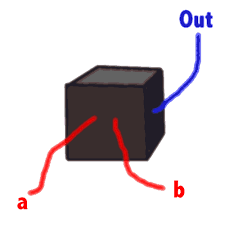
a & b = the 2 (pick any two ) *incommensurate “kinds”
OUT =: the emerging phenomenon and values
And then that Black Box—veiled for USE (velocity, flow,
moving right along); unveiled for POSITION (wait,
watch, slow down: let’s see what’s inside, what we’re
actually talking about Willis.)
xxxooo, Kneels Boar


No comments:
Post a Comment