

To Language-ers & colleagues across the curriculum
(also to fictionists and transcendentalists for your
playful consideration re: patterns in science and art )::
Sustain Ability (Integrating the Triad)
language texts & I bet in textbooks across
the curriculum. This Pattern of patterns:


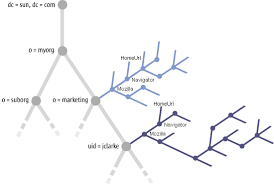
Got to Love the Hierarchy.
Or call it holarchy, if you
that a whole is also a part and a part:
whole;
looking UP or Down
chart & chain of command, a
me, too: we're dependent and subservient
as well as
It is this doubleness in me and all my organs
&
do
diction
speak out of
if not—better--all 3.
*********
Arthur Koestler (novelist, biologist):
“We have seen that biological holons, from organization
down to organelles are self regulating entities which
manifest both the independent properties of wholes
and the depending properties of parts.
“The mitochondria, for instance, are power plants.
The activities of a mitochondrion can be switched
on or off by controls on higher levels; but once
triggered into action it will follow its own code of rules.
It cooperates with other organelles in keeping the cell
happy, but at the same time each mitochondrion is a
law unto itself, an autonomous unit which will assert
its individuality even if the cell around it is dying.
“All complex structures and processes of a relatively
stable character display hierarchic organization,
regardless whether we consider galactic systems,
living organism and their activities, or social
organizations.
“The tree diagram with its series of levels can be
used to represent the evolutionary branching of
species onto the “tree of life”; or the step wise
differentiation of tissues in the development of
the embryo.
“Anatomists use the tree diagram to demonstrate
the locomotor hierarchy of limbs, joints, individual
muscles, and so on down to fibers, fibrils and
filaments of contractile proteins
“Ethologies use it to illustrate the various sub-routines
involved in such complex instinctive activities as a
bird building a nest.
“It is also an indispensable tool to the new school
of psycholinguistics started by Chomsky.
“It is equally indispensable for an understanding.
of the processes by which the chaotic stimuli
impinging on our sense organs are filtered and
classified in their ascent through the nervous
system into consciousness.
“Lastly, the branching tree illustrates the hierarchic
ordering of knowledge in the subject index of library
catalogs—and the personal memory stores inside
our skulls. .
“Let us note that nowhere on the upward or downward
journey through the linguistic holarchy do we encounter
hard and indivisible “atoms of language.” Each of the
entities on various levels—phonemes, morphemes,
words, sentences—is a whole relative to its parts, and
a subordinate part of a more complex entity on the
next higher level.
“For instance, a morpheme like /men/ is a linguistic
mention, mentor, etc.; and which particular meaning it
will assume depends on the context on the higher level.
“Generally speaking, the performance of any purposeful
action whether instinctive, like the nest-building of birds,
or acquired as most human skills are, follow the same
PATTERN of spelling out a general intent by the stepwise
activation or triggering of functional holons—sub-routines
on successively lower levels of the hierarchy.
“This rule is is universally applicable to all sorts of
“output hierarchies,”regardless whether the “output” is a
human baby, a sentence spoken in English, the playing of
a sonata r the act ion of untying one's shoelaces, [For
input hierarchies....the reverse sequence holds]
“The rules which govern the interaction of such atomic
particles are not the same rules which govern the
interactions between atoms as wholes; and the ethical
rules which govern the behaviors of individuals are not
the ethical rules which govern the behavior of crowds or
armies. Accordingly the manifestation of the polarity
of self-assertive and integrative tendencies, which we
find in all phenomena of life, will take different forms
from level to level.”
See his Bricks to Babel. or The Act of Creation where he
theorizes about innovation in science and art and biology in
terms of “collision”— when 2 or more frames of reference
collide (at the crossroads, say). And THEN what happens?
Invention is mothered. Or art. Possibly humor--depending
on the over-all frame of mind, say, in which the crash
occurs. This is worth arguing-out.


No comments:
Post a Comment